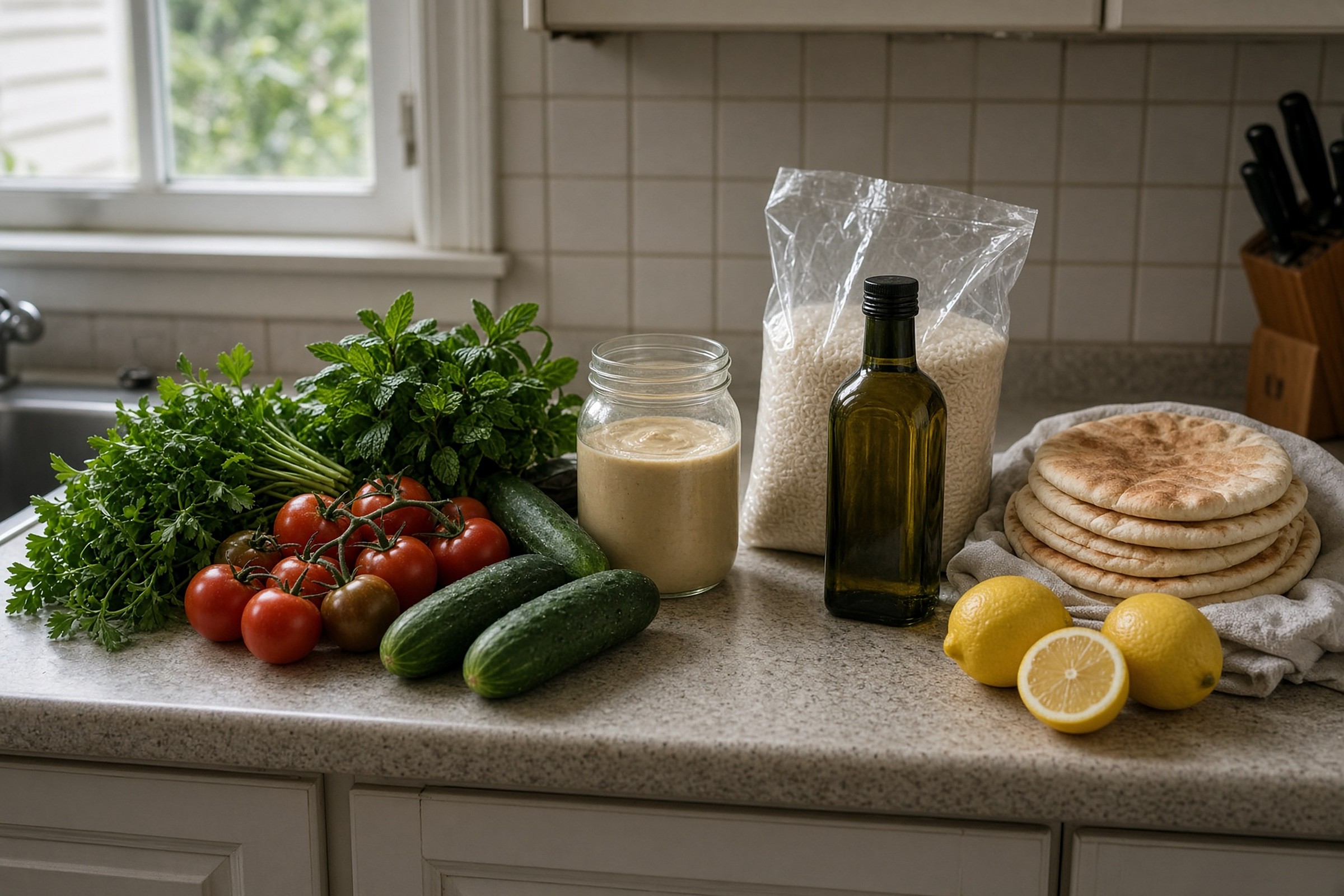
Blood sugar, without deleting the rice.
Type 2 diabetes, prediabetes and insulin resistance are common in our community, and the standard advice usually arrives with a list of everything a Middle Eastern kitchen is built on.
Nearly everyone who comes in with a glucose problem has already been told to cut carbohydrates. Almost nobody has been told what to put next to them, when to eat them, or how to keep cooking for a household while doing it.
That gap is where the work is.
Same bread. Two different mornings.
Carbohydrate eaten alone and the same carbohydrate eaten alongside protein, fat and fibre do not behave the same way.
The levers that move before anything is removed.
In most first months, these do more than a restriction list ever did.
- Pairing. Bread with labneh and egg rather than bread with sweet tea. Rice with a real portion of protein and a salad beside it.
- Order and pace. Vegetables and protein early in the meal, eaten sitting down, not the last five minutes of a lunch break.
- Timing. Long gaps followed by a very large evening meal are one of the most common patterns behind difficult numbers.
- Liquid sugar. Sweet tea, juice and soft drinks reach the bloodstream faster than almost anything on the plate. This is usually the highest-yield change.
- Proportion, not exile. Rice, bread, freekeh and burghul stay. How much of the plate they occupy is what moves.
Clinical goals, translated into a real kitchen.
Reading your numbers with you
A1c, fasting glucose, and any glucose-monitor patterns — explained in plain English or Arabic, so you know what you are steering by.
Rebuilding the usual meals
Not new recipes. The meals you already cook, adjusted in proportion and pairing so they land differently.
Family, holidays and fasting
Ramadan, weddings, Sunday lunch and a mother-in-law who cooks. A plan that cannot survive these is not a plan.
Ramadan note →Staying inside scope
Medication, insulin and diagnosis stay with your physician. Samar works alongside them, and says so clearly when something belongs to your doctor.
Bring the labs and last week’s meals.
Those two things together are enough for a first conversation. English or Arabic.
This page is general education, not medical advice, a diagnosis, or a treatment plan. Medical nutrition therapy works alongside your physician, never instead of them. Samar does not diagnose conditions, prescribe medication, or change medication doses. If you take medication, do not adjust it based on anything you read here.