Cholesterol, blood pressure, and the olive oil myth.
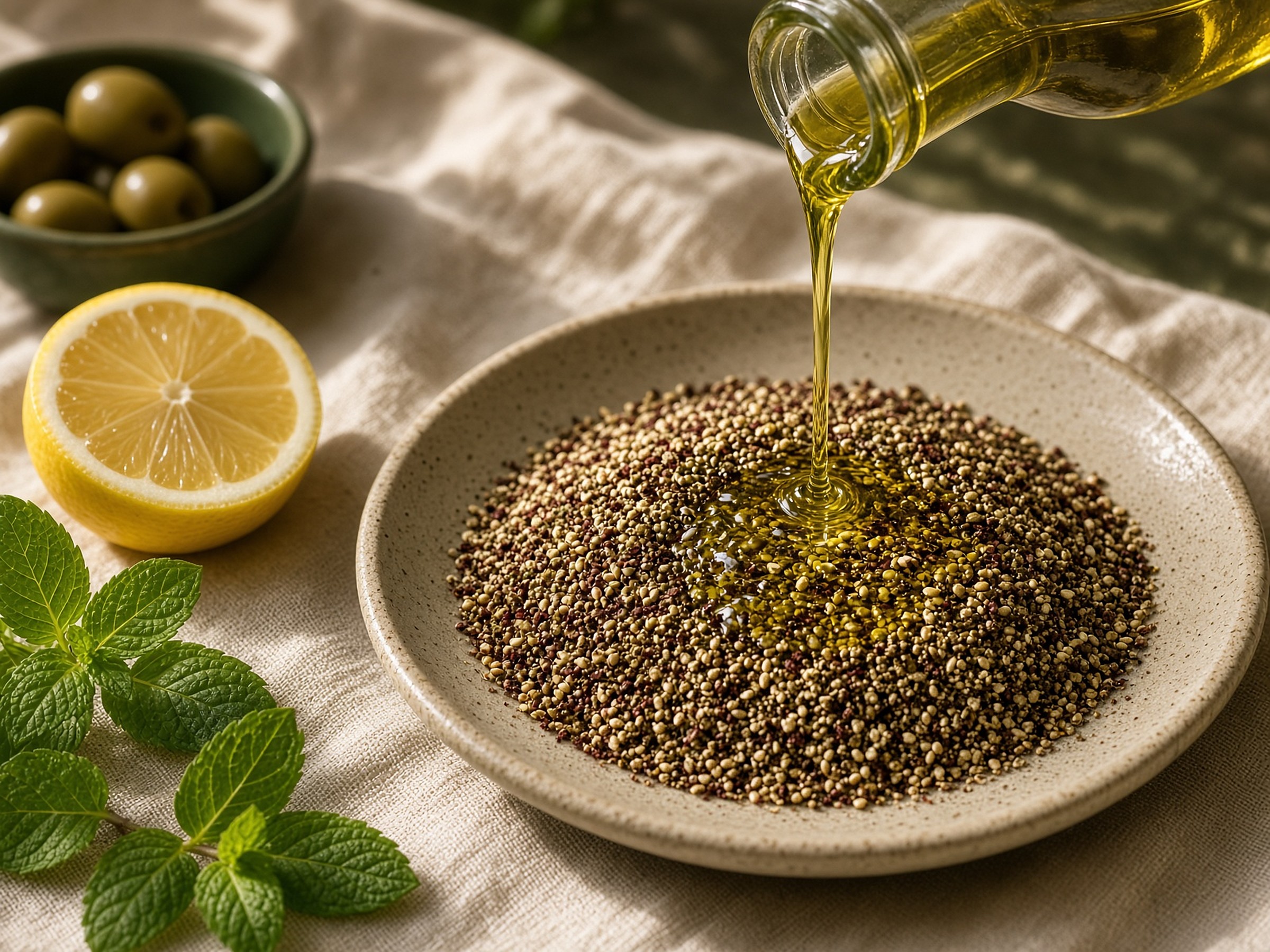
The most common thing Samar has to undo on this topic is the belief that olive oil is the problem. It is one of the most consistently well-regarded fats in nutrition science.
What usually needs attention instead
When lipids or blood pressure come back high, the conversation is rarely about the olive oil. It is more often about four other things.
- Saturated fat load — ghee and butter used heavily, fatty cuts of lamb and beef several times a week, full-fat dairy at every meal.
- Fried and processed food frequency — not any single item, but how many days of the week one appears.
- Sodium — pickles, salted cheeses, cured meats, bouillon cubes, canned foods and bread all stack up quickly, and blood pressure responds to the total.
- What is missing — fibre from legumes, oats and vegetables; oily fish; nuts. Additions often matter more than subtractions here.
What the cuisine already gets right
A Levantine table is closer to a Mediterranean pattern than most people realise: legumes as a staple, olive oil as the default fat, vegetables at volume, fish where it is available, yogurt daily, fruit as dessert. The work is usually adjustment, not replacement.
Changes that fit the way you already cook.
None of these require a separate meal from the rest of your household.
- Keep olive oil as the cooking and finishing fat; reduce how often ghee and butter carry a dish.
- Let a legume dish take one or two dinners a week that meat currently takes — mujaddara, lentil soup, foul, bean stews.
- Move to leaner cuts more often, and let lamb be an occasion rather than a default.
- Read the salt across the whole day, not per dish — the pickles and the cheese and the bread and the bouillon together.
- Add oily fish where it works, and nuts as a normal snack rather than a special-occasion food.
Alongside your physician, never instead.
Reading the panel together
LDL, HDL, triglycerides and blood pressure explained in plain language — including which of them your food actually moves, and by roughly how much.
A realistic month
Two or three changes at a time, chosen for what your week can actually absorb.
Statins and medication
Prescribing and dose decisions belong to your doctor. Nutrition therapy runs beside them; it is not a substitute and is never a reason to stop a medication.
Have a lipid panel you do not fully understand?
Bring it. Understanding what you are steering by is half of the work.
This page is general education, not medical advice, a diagnosis, or a treatment plan. Medical nutrition therapy works alongside your physician, never instead of them. Samar does not diagnose conditions, prescribe medication, or change medication doses. If you take medication, do not adjust it based on anything you read here.