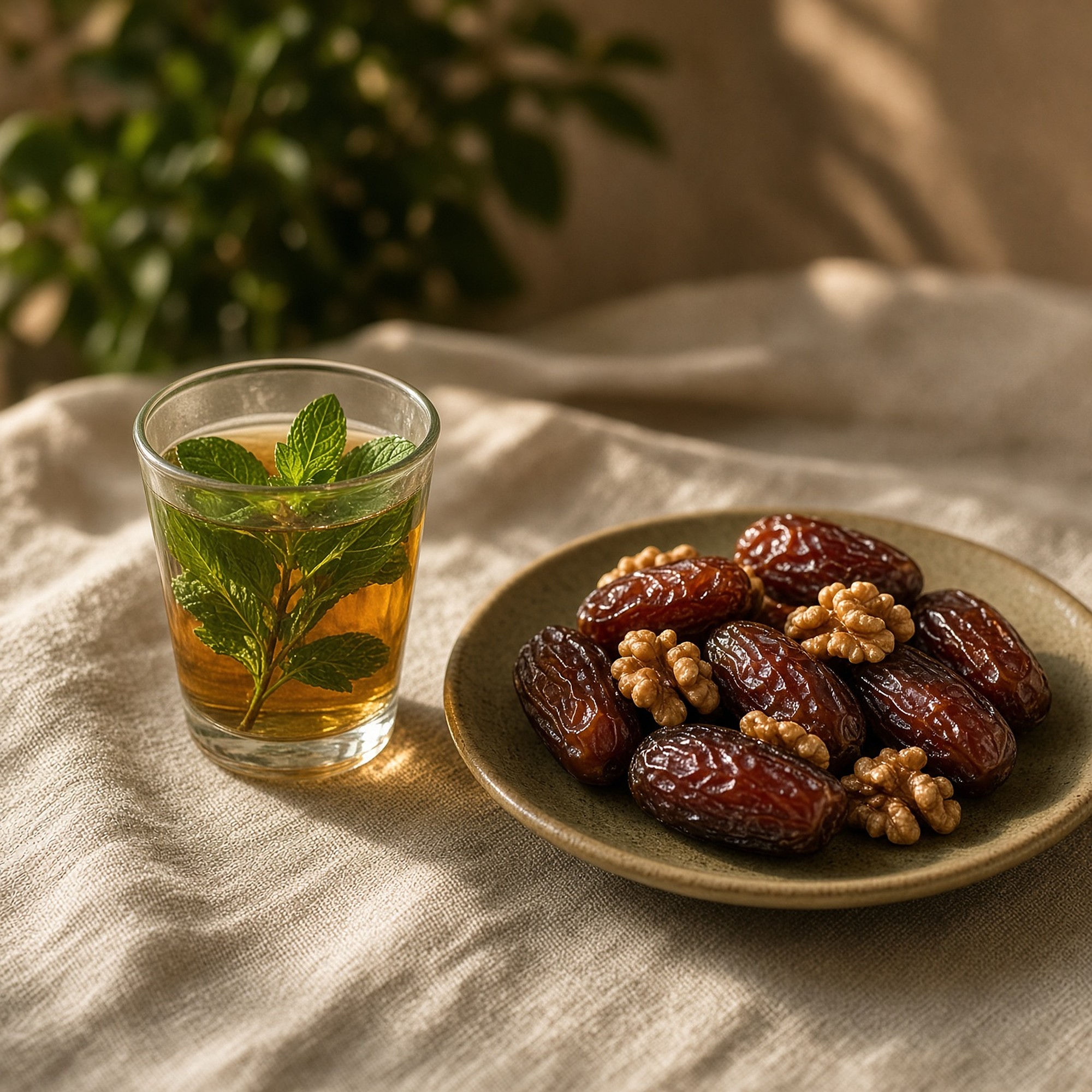
The Ramadan table, without the crash.
Fasting is not the reason people end the month depleted. The shape of the two meals around it usually is.
Every year the same conversation: the headaches by day four, the heaviness after iftar, the 2am energy, the exhaustion that arrives in week three and does not lift. It gets blamed on the fast itself. Most of the time it is fixable, and the fix is unglamorous.
Iftar: the first ten minutes decide the next three hours
The traditional opening is already right — dates and water. Dates give quick sugar to a body that needs it, and water starts undoing the day. What tends to go wrong is what happens immediately after: a full plate eaten fast, on an empty stomach, heavily weighted toward fried food and refined starch.
- Break the fast, then pause. Dates, water, soup — then pray, then eat the meal. That gap is not a religious formality doing nutritional work by accident; it genuinely changes how much you eat and how you feel afterwards.
- Put protein on the plate before the bread. Lentil soup, yogurt, chicken, meat, foul, beans. It is the difference between satisfied and stunned.
- Keep the fried things and reduce the number of them. Sambousek is not the problem. Sambousek plus fatayer plus fries plus bread in one sitting is.
- Salad is not a garnish in this month. Fibre and water both matter more than usual.
Suhoor: the meal most people underbuild
Skipping suhoor, or making it a piece of bread and sweet tea, is the single most common reason the next day is brutal. A suhoor that holds needs three things:
- Protein — eggs, labneh, yogurt, cheese, foul.
- Slow carbohydrate — oats, whole grain bread, freekeh, burghul.
- Fat — olive oil, tahini, nuts, avocado.
Add fruit or vegetables and water. Go easy on very salty foods at suhoor: pickles, heavily salted cheese and processed meats will make the following afternoon thirstier than it needs to be.
Water, in the hours you actually have
You have roughly a ten-hour window and most people use very little of it. Spread fluid between iftar and suhoor rather than drinking heavily right before the fast begins. Tea and coffee still count as fluid, but if iron is a concern, keep the timing rule from the note on tea and iron.
Sweets, honestly
Qatayef and kunafa belong to the month, and a plan that pretends otherwise will simply be ignored. What helps is position, not prohibition: eat them after a meal rather than as the meal, sitting down rather than standing at the table, and let them be an event rather than a background that runs for thirty nights.
When to speak to someone before the month starts
Fasting interacts with medication and with several conditions in ways that need planning rather than improvisation — insulin and other diabetes medications especially, along with kidney disease, pregnancy, breastfeeding and any condition requiring timed doses. That conversation belongs with your physician, and it is much easier to have in advance than on day six.
Planning for the month ahead?
Ramadan is the easiest time of year to plan for and the hardest to improvise through.
Kitchen notes are general education, not medical advice, a diagnosis, or a substitute for care from your physician. If you take medication or manage a diagnosed condition, changes to your diet are worth discussing with your care team.