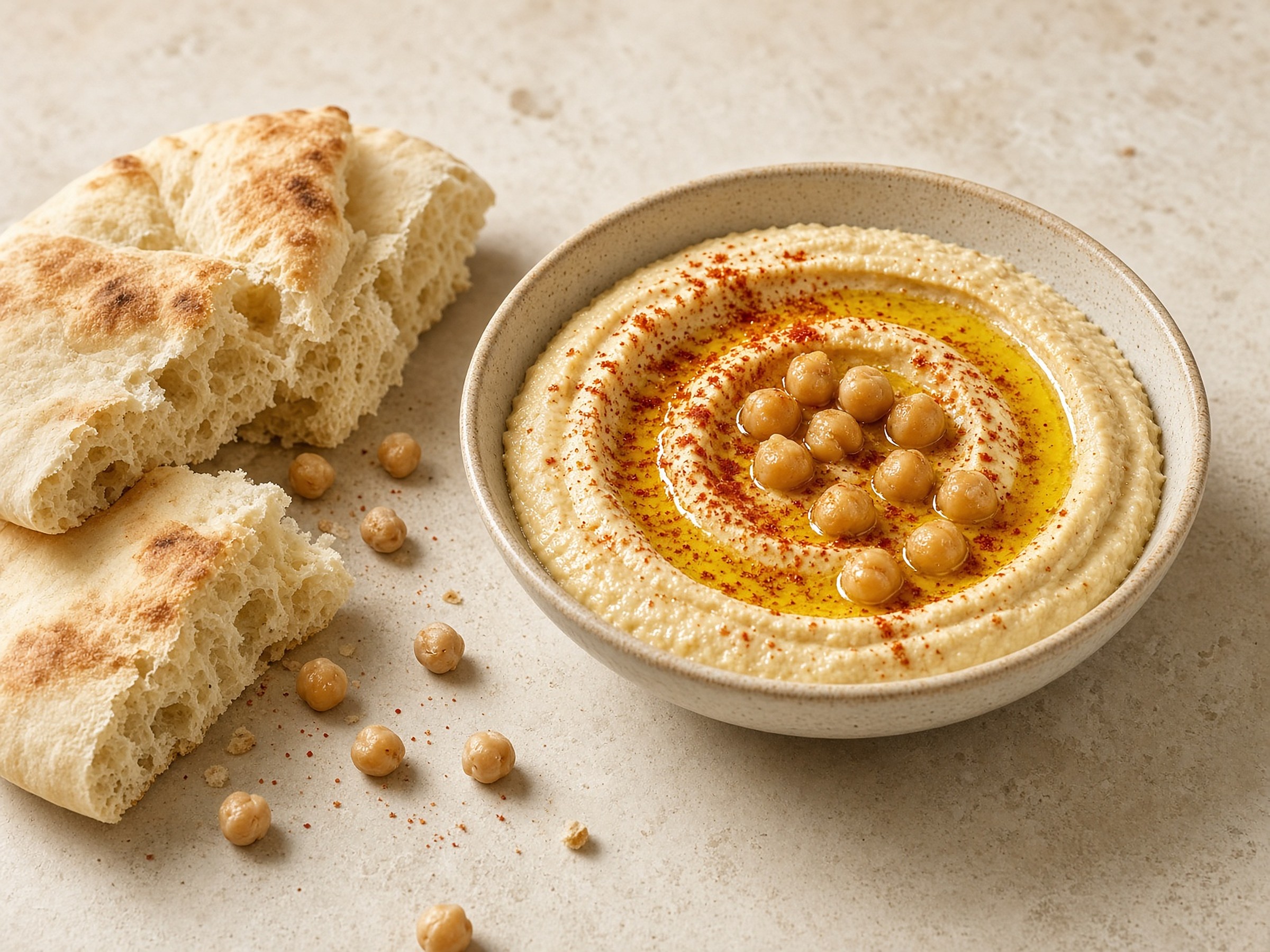
You can keep the hummus.
A plan that begins by exiling your cuisine has already told you what it thinks of your family.
A woman comes in with a printed handout. Breakfast: egg whites and spinach. Lunch: grilled chicken breast, brown rice, steamed broccoli. Dinner: grilled chicken breast, sweet potato, steamed broccoli. She has been given this three times by three different people over eleven years.
She followed it for nine days the first time, six the second, and did not start the third.
The usual reading of that story is a discipline problem. It is not. It is a design problem.
What the handout is really asking
That sheet does not ask her to eat differently. It asks her to stop cooking for her household, to eat separately from her own family, to explain herself at every gathering, and to abandon a set of dishes that carry her mother, her language and her holidays. It asks her to be a guest at her own table.
Nobody sustains that. The people who appear to sustain it usually have someone else cooking for them.
What the cuisine already does well
Look honestly at a Levantine table and a lot of it is what nutrition guidance has been asking for all along:
- Legumes as a staple, not a health food. Lentils, chickpeas, foul, white beans — eaten weekly, without anyone framing them as a sacrifice.
- Olive oil as the default fat.
- Vegetables in volume — fattoush, tabbouleh, mahshi, cooked greens, salads served at nearly every meal rather than as a side gesture.
- Fermented dairy. Yogurt and labneh, daily.
- Fruit as dessert, and eating that happens at a table with other people rather than alone over a screen.
Hummus specifically is chickpeas, tahini, lemon and olive oil. If you designed a dip from scratch to deliver fibre, plant protein and unsaturated fat, you would land near it.
So what actually changes?
Usually proportion and pairing, not membership.
The question is almost never “is this food allowed?” It is “what is next to it, how much of the plate is it, and when in the day does it arrive?”
The rice stays and the ratio in the bowl moves. The bread stays and gains a protein beside it. The sweets stay and stop being the thing that fills a gap left by a skipped lunch. Portions shift by a spoon, not by a decree.
Why this is a clinical argument, not a sentimental one
Adherence is not a soft outcome — it is the outcome. A plan followed for eleven months at 70% precision beats a perfect plan followed for nine days, every time, in every marker anyone measures.
Culturally fluent care is not about being nice to people’s heritage. It is about writing the version of the plan that will still be running next spring.
Bring the plan that did not work.
Often the fastest first session starts with the handout you abandoned and why.
Kitchen notes are general education, not medical advice, a diagnosis, or a substitute for care from your physician. If you take medication or manage a diagnosed condition, changes to your diet are worth discussing with your care team.