Sufra·8 min
How to build a Levantine plate that actually satisfies.
A method you can use tonight: one plate, five parts, no imported grocery identity.
The “balanced plate” posters in American clinics are not wrong. They are unfinished. They show a lean protein, a pile of steamed vegetables, and a modest starch — a plate that does not look like Damascus, Beirut, or a Metro Detroit Friday. Samar’s Sufra plate is the same science in a different dialect.
The five parts
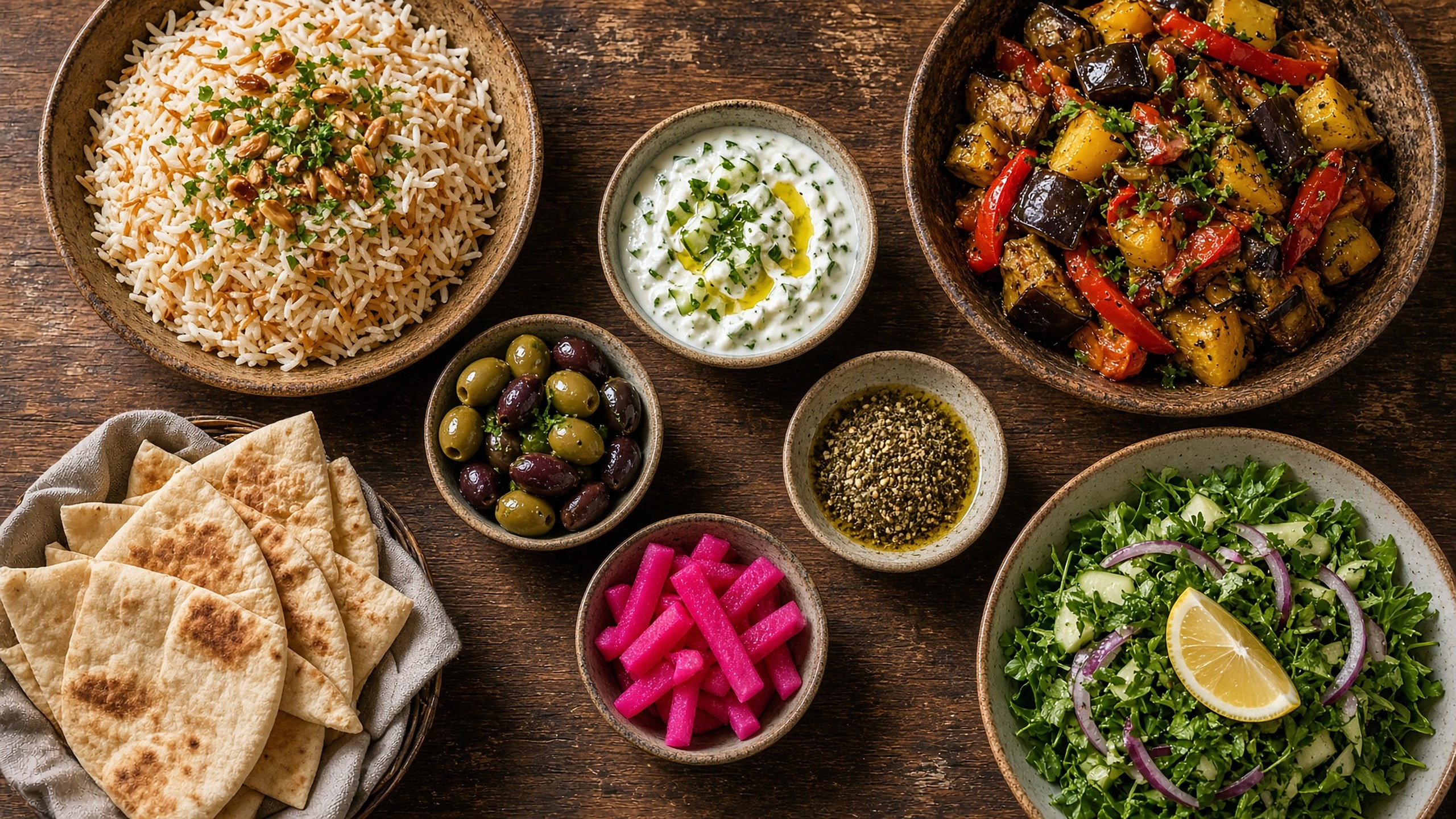
- A foundation of plants: cucumber, tomato, herbs, salad, cooked greens, roasted vegetables. This is already how mezze thinks.
- A starch you recognize: rice with vermicelli, bulgur, potatoes, pita, freekeh. Not banned. Sized, and not left alone on the plate.
- A protein that already lives in the kitchen: yogurt, cheese, beans, lentils, eggs, fish, chicken, lamb, beef.
- Fat with a job: olive oil, tahini, nuts. Used, not feared. Measured with the eye after you have looked once.
- The gathering foods: olives, pickles, fresh fruit, tea. They belong. They do not have to be the whole event.
Satisfaction is not a soft word here. A plate that is only salad will send you back to the bread. A plate that is only rice will do the same two hours later. The Levantine table already knew this: mezze exists because a single pile is not a meal. The clinical job is to stop dismantling that wisdom in the name of health.
A Tuesday version
Rice, a stew or roasted vegetable, a bowl of yogurt, a plate of cucumber and tomato, olive oil you can still count. Fruit after, if that is the house. This is not a recipe blog. It is a shape. Once you can see the shape, you can cook whatever the family actually wants inside it.
Mezze is not chaos. It is a plate already thinking in parts.
If blood sugar, reflux, or a specific diagnosis is in the room, the shape stays and the details change — which rice, when the bread arrives, how late the last plate is. That is session work, not a caption.
Kitchen notes are public education. They are not a personal nutrition plan and they do not replace a visit with a registered dietitian or your physician.